
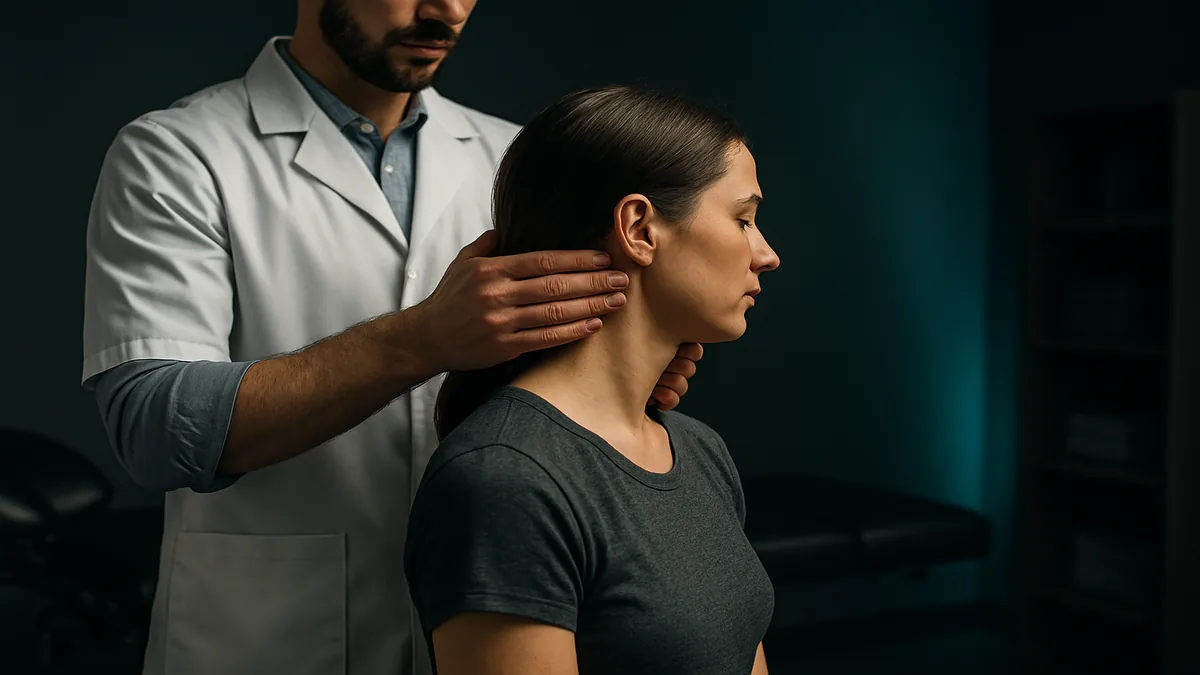
What "Auto Injury Chiropractor" Actually Means
Not every chiropractor has the same experience with auto accident cases. Some practices focus primarily on maintenance care or general wellness adjustments. Others, like QLC, work regularly with post-collision injury patterns — whiplash, cervical strain, low back sprain, rib bruising, shoulder involvement — and understand the documentation requirements that go along with those cases.
An auto injury chiropractor should be able to do several things that go beyond a standard adjustment visit:
- Conduct a thorough orthopedic and neurological examination documenting the mechanism of injury
- Identify the specific structures involved and rule out conditions that need imaging or specialist referral
- Build a treatment plan tied to measurable clinical goals, not an open-ended schedule
- Produce clear, accurate records that reflect your clinical status at each visit
- Coordinate with your attorney or adjuster if needed, without letting that relationship drive clinical decisions
That last point matters. This post on finding an auto accident chiropractor in Overland Park covers the difference between a practice oriented toward clinical recovery and one oriented toward generating visit volume for case value. The two are not the same, and patients sometimes don't realize which one they're in until months later.
Why Timing Matters After a Car Accident
The window between the accident and your first evaluation is clinically significant. In the acute phase — roughly the first 72 hours — adrenaline and inflammation can mask the full extent of symptoms. Many patients report feeling "fine" immediately after a collision and then notice increasing stiffness, pain, and limited range of motion over the following two to five days.
Waiting too long to be evaluated creates two problems. First, the clinical picture becomes less clear — it's harder to establish a direct link between the injury mechanism and your current symptoms as time passes. Second, the acute inflammatory phase, if left unmanaged, can transition into a chronic pain pattern that is significantly harder to resolve.
The general recommendation is to be evaluated within 72 hours of the accident, even if you feel you can wait. This is not about generating documentation for its own sake — it's because the clinical trajectory of post-collision injuries is better when intervention begins early.
Whiplash is a good example. The tissue damage from a rear-end collision is often in the cervical musculature, facet joints, and supporting ligaments — none of which shows on a standard X-ray. This post on how long whiplash takes to heal explains the biological timeline and what factors influence whether someone recovers in weeks versus months.
What to Look For in an Auto Injury Chiropractor Near You
When you're evaluating providers, the first visit is itself diagnostic — not just of your injury, but of the practice. Here is what to look for:
A thorough intake and examination. The first visit should include a detailed history of the accident mechanism, a full orthopedic and neurological screen, and range of motion measurements. If the provider moves directly to treatment without a proper examination, that is a problem — not because treatment won't help, but because without an accurate baseline, there's no way to track progress or identify complications.
A clear treatment plan with defined goals. At the end of the first visit, you should understand what the plan is, approximately how long it will take, and what "getting better" looks like in measurable terms. Open-ended "come in three times a week indefinitely" is not a treatment plan.
Honest limits on what chiropractic can and cannot do. Not every symptom after a car accident is musculoskeletal. Headaches that began immediately after impact may warrant neurological evaluation. Jaw pain may need a different specialist. A good auto injury chiropractor identifies when referral is appropriate — and makes it promptly.
Clean, specific documentation. Every visit note should accurately reflect your status that day: your reported symptoms, the examination findings, the treatment performed, and your response. Vague or templated notes that don't change visit to visit are a documentation problem that can affect your case.
Documentation and Personal Injury Cases
If your accident involved another driver's negligence, your chiropractic records become part of your personal injury claim. This is worth understanding before you choose a provider — not because you should select a chiropractor based on what they'll say for your case, but because poor documentation practices can create problems even when your injuries are real and your care is appropriate.
This post on chiropractic documentation in personal injury cases covers what adjusters and attorneys actually look for in medical records, and why the clinical notes from your chiropractic visits carry significant weight in how a claim is evaluated.
The short version: records that reflect a clear mechanism of injury, objective examination findings, and a structured treatment plan tied to measurable outcomes are more credible — and more useful to your case — than records that simply document that you came in and received an adjustment.
At QLC, we document every visit with the same standard we would apply regardless of whether there's litigation involved. That consistency matters both clinically and for case purposes.
What to Expect at QLC After an Auto Accident
The first visit is an evaluation. We review the accident mechanism, conduct an orthopedic and neurological examination, assess range of motion, palpate the involved structures, and determine what imaging — if any — is indicated. If your symptoms suggest something beyond musculoskeletal involvement, we will tell you that and refer appropriately rather than starting treatment that isn't suited to your problem.
If chiropractic care is appropriate, we build a plan. Auto injury cases typically follow a phased approach: an acute phase focused on pain reduction and restoring basic motion, followed by a rehabilitation phase focused on strength, stability, and return to full function. The timeline depends on the severity of the injury, your pre-existing health, and how early treatment begins — but every case has a goal of discharge, not indefinite care.
We coordinate with attorneys and insurers when needed. That coordination involves sharing records and participating in correspondence — it does not involve adjusting your clinical care based on case strategy. The clinical decisions are always made based on your examination findings.
Realistic Timeline for Auto Injury Recovery
Most soft tissue auto injuries — cervical and lumbar strain, whiplash-associated disorder, rib bruising — resolve meaningfully within six to twelve weeks of appropriate care. Severe injuries, injuries with pre-existing degeneration, and cases where treatment is delayed tend to take longer.
What "recovery" means in practice is a return to pre-accident function: the same range of motion, the same pain levels (or less), and the ability to perform daily activities without restriction. For some patients, particularly those with significant soft tissue damage, there may be a residual component that persists — but the goal is always to maximize recovery, not to manage symptoms indefinitely.
Progress should be measurable at each visit. If you are three weeks into care and your range of motion hasn't improved and your pain levels haven't decreased, something in the plan needs to change. Improvement that doesn't hold between visits is a signal — either the treatment frequency needs adjustment, there's an unaddressed contributor, or the diagnosis needs to be revisited.
Serving Overland Park and Johnson County
We regularly see patients from Overland Park, Leawood, Lenexa, Olathe, Shawnee, and Prairie Village after auto accidents. Our office is located at 7102 College Blvd in Overland Park — straightforward access from College Blvd and most of south Johnson County.
If you've been in an accident and you're not sure whether your symptoms warrant an evaluation, the answer is almost always yes. The evaluation itself clarifies what's going on — and in the event that nothing significant is found, that's also a useful clinical result.
If you're dealing with this and want a clear plan, the next step is a proper evaluation. At Quality Life Chiropractic in Overland Park, we focus on identifying the root issue and building a structured plan to fix it.
Frequently Asked Questions
How soon after a car accident should I see a chiropractor?
Within 72 hours if possible, even if symptoms feel mild. The acute phase is when the clinical picture is clearest and when early intervention has the most impact on trajectory. Many patients report that their worst symptoms appeared two to five days after the accident — getting evaluated before that happens establishes the baseline you need.
Will my auto insurance cover chiropractic care?
In most Kansas and Missouri auto accident cases, chiropractic care is covered either through your PIP (personal injury protection) coverage or the at-fault driver's liability insurance. The specifics depend on your policy and the circumstances of the accident. We can help walk through the billing process — the first step is the evaluation.
Do I need a referral to see a chiropractor after an accident?
In Kansas, you do not need a physician referral to see a chiropractor. You can schedule directly. If your injury requires imaging or specialist referral, we will coordinate that from the chiropractic evaluation rather than requiring you to start elsewhere.
What if I already have a personal injury attorney?
That's common and not a problem. We coordinate with attorneys regularly — sharing records, responding to records requests, and occasionally providing narrative summaries of your care. Clinical decisions are made based on your examination, not on case strategy.
Does Quality Life Chiropractic see patients from outside Overland Park?
Yes. We regularly see patients from Leawood, Lenexa, Olathe, Shawnee, Prairie Village, and throughout Johnson County, KS after auto accidents.